


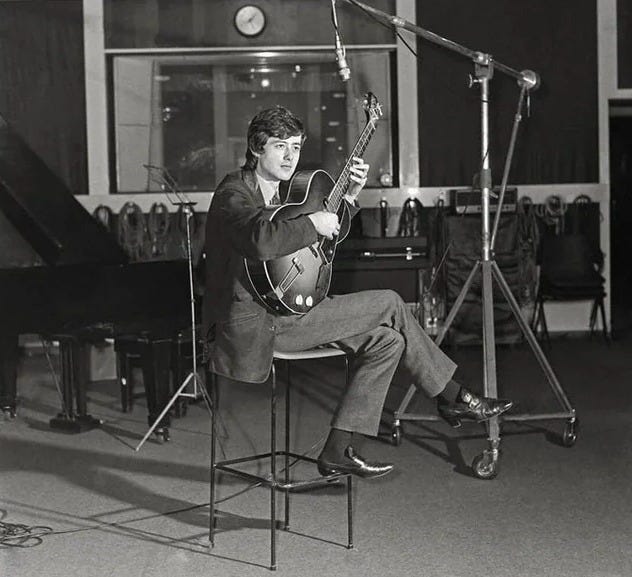
Jimmy Page and I share a birthday on January 9th, although he has a 14-year head start on me. Others include Joan Baez, Kate Middleton, Dave Matthews and Richard Nixon.
While I usually mark the day with a simple social media shoutout, this year I wanted to write something more substantial.
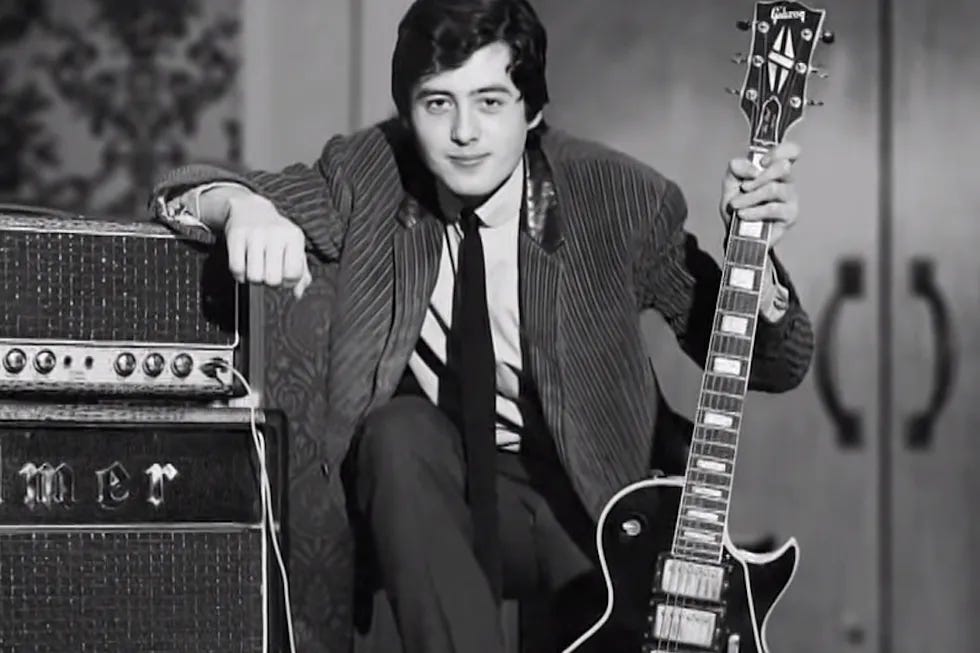
I’m focusing on his prolific era as a session musician—a pivotal period that led to his time with the Yardbirds and the eventual formation of Led Zeppelin. Though often overlooked, this chapter of his career is where he honed the production, orchestration and guitar techniques that became the backbone of the Zeppelin sound.
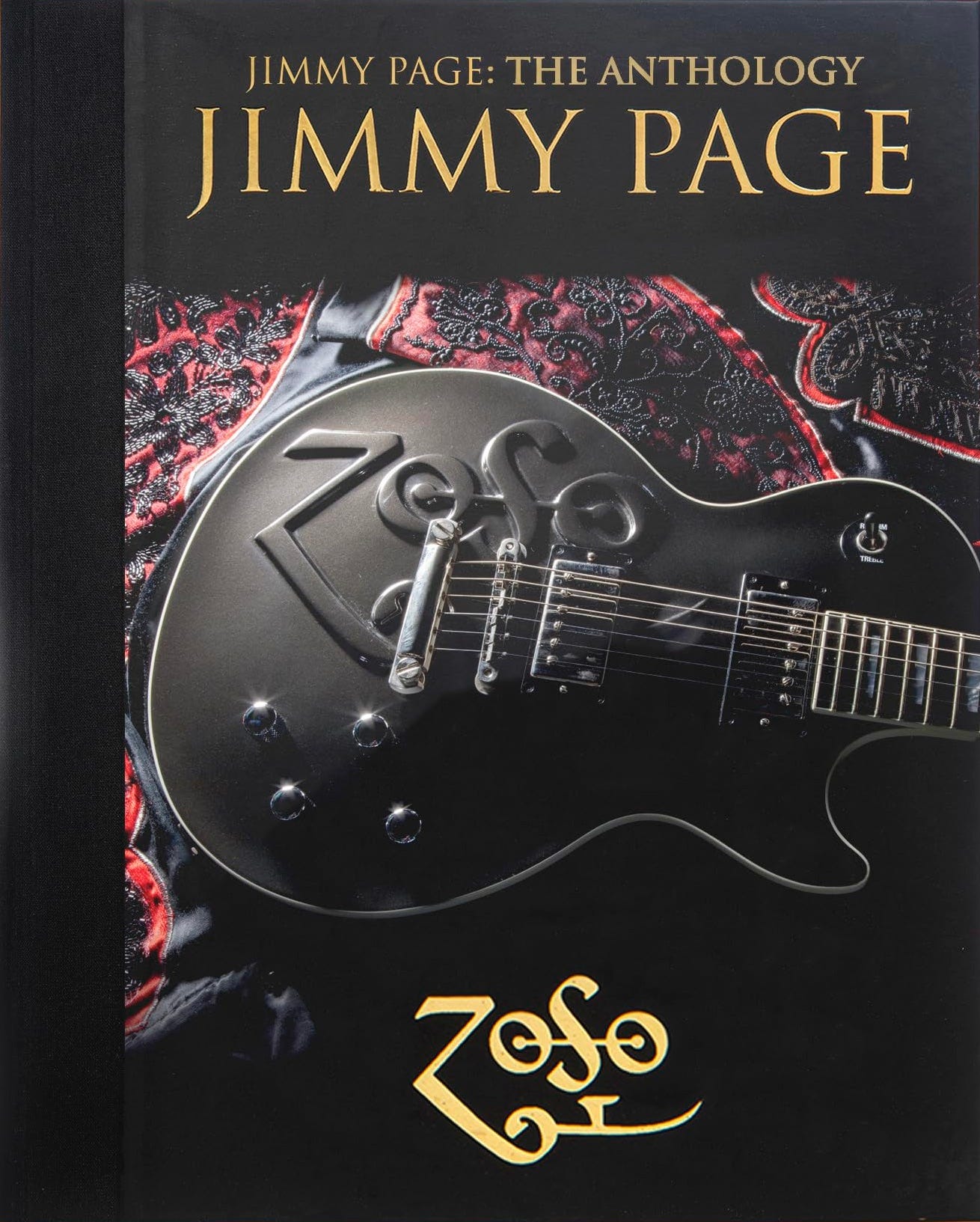
Many of the links and quotes in this article can be found in Jimmy’s excellent book: Jimmy Page: The Anthology. If you are a fan of him and Led Zeppelin, it’s a must-buy.
Backstory.
His life is very well documented, and rather than plough the same furrow, it’s probably best to look at his very extensive Wikipedia page, but in summary:
Page was born into a middle-class family and raised in Surrey, England. He began his musical journey as a largely self-taught guitarist inspired by rockabilly and the blues. After debuting on BBC television at just 13 years old in a skiffle quartet, he made the pivotal decision to leave school at fifteen to pursue music professionally.
His early years were defined by a relentless hustle, playing in various local groups like The Paramounts and backing music for beat poets, eventually landing a consistent touring role with Neil Christian and the Crusaders. This period served as a rigorous ‘schooling’ where Page developed the technical versatility that would soon become his professional trademark.
“I was travelling around all the time in a bus. I did that for two years after I left school, to the point where I was starting to get really good bread. But I was getting ill. So I went back to art college. And that was a total change in direction. That's why I say it's possible to do. As dedicated as I was to playing the guitar, I knew doing it that way was doing me in forever. Every two months I had glandular fever. So for the next 18 months I was living on ten pounds a week and getting my strength up. But I was still playing.”
The transition toward becoming a dedicated session musician was catalysed by a health crisis; the gruelling pace of touring led to recurring bouts of glandular fever, forcing Page to briefly exit the road and enrol in Sutton & Cheam School of Art. During this recovery period, he shifted his focus from live performances to the controlled environment of the recording studio.
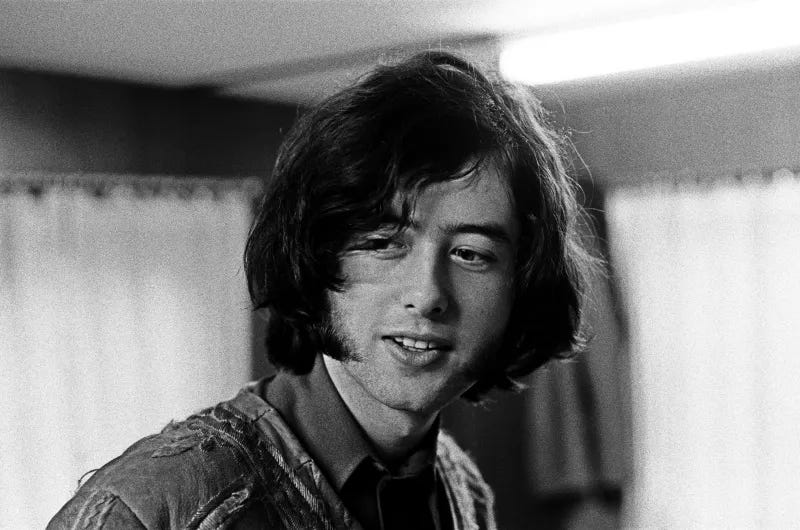
The session guy.
Page played on Shirley Bassey’s Goldfinger, the James Bond theme tune to Casino Royale, plus sessions with The Rolling Stones, The Kinks, The Who, Joe Cocker, Lulu, Petula Clarke, Donovan, Marianne Faithfull, Van Morrison and Them, Cliff Richard, Nico, Tom Jones, David Bowie and the Everly Brothers, to name a few.
Everyone needs a break
While attending art college, Page continued to perform live, notably playing in the interval band on Thursday nights at London’s Marquee Club. It was during these performances on Oxford Street that he was headhunted for studio work, effectively launching his career as a session musician.
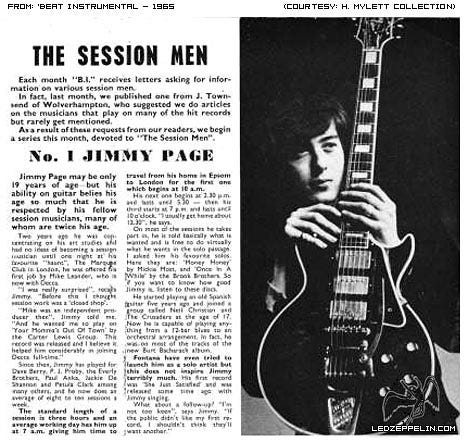
Page kept a pocket and desk diary, meticulously noting the time, date and location of the session. His Anthology book has piles of fascinating pictures of the entries.
“Anyone needing a guitarist either went to Big Jim Sullivan or myself. In the initial stages they just said, play what you want, cos at that time I couldn't read music or anything."
My favourites
I thought it would be a good idea to collate a playlist featuring many of the songs from his sessions, and have also highlighted the performances I really like.
Screaming Lord Such | Dracula’s Daughter
While this isn’t my favourite track, it highlights Joe Meek’s pioneering and distinctly British production/engineering style. Page’s performance is equally impressive, featuring great riffs and an outstanding guitar tone.
Interestingly, Lord David Such’s album Lord Sutch and Heavy Friends was named in a 1998 BBC poll as the worst album of all time, a status it also held in Colin Larkin’s book The Top 1000 Albums of All Time, despite the fact that Jimmy Page, John Bonham, Jeff Beck, Noel Redding and Nicky Hopkins performed on it and helped write it. If you take out the vocals, the instrumental parts are pretty cool. Listen with caution.
In 1982, Such—who was a perennial parliamentary candidate and encouraged young people to participate in politics—formed the Official Monster Raving Loony Party, which contested 39 parliamentary elections.
Screaming Lord, we need you back.
Wayne Fontana and the Mindbenders | Hello Josephine (1963)
One of his first sessions at Philips Studio was for Wayne Fontana and the Mindbenders. Eric Stewart from 10cc was in the band at the time. You can really hear Page’s Scotty Moore influence in this track.
Donovan | Sunshine Superman (1966)
Great guitar riff on this that really makes the song, with Page using his volume control (perhaps the DeArmond volume/tone pedal) to create the repeating lines. Micky Most produced this and went on to work with Jeff Beck on his debut studio album Truth plus a pile of other chart-topping singles and albums.
It’s interesting to see how Page developed relationships with movers and shakers over the years. Later, Peter Grant, Zepplin’s ferocious manager, shared a company RAK Management and office with Most.
Them | Baby Please Don’t Go (1964)
The first time I heard this was via Stuart Hulme-Sheffield, the sound engineer with my first band, Whitefire. He was one of the guitar players in a ‘60s band, The Web and used to play this all the time.
Fuckin’ great guitar motif, and it’s disputed who played it, either Page or the band’s guitar player, Billy Harrison. Regardless, it’s very cool.
Beverly Martyn | Happy New Year (1966)
Beverly Martyn (nee Kutner and wife of John Martyn) used to live with the mighty Bert Jansch and apparently on the session for Happy New Year, Page asked her if she could play Oh Deed I Do - she said “I can’t, but I can show you the chord positions” :) Check out Nicky Hopkins’ piano. Fuckin’ A.
Of course, an interpretation—or plagiarism—of Jansch’s Black Water Side (which in itself was an arrangement of a traditional tune) appears on Led Zeppelin I.
Have a listen to both and make your own mind up.
Jeff Beck | Beck’s Bolero (1966)
There is some dispute over who actually wrote this, Page or Beck; regardless, it’s an absolute classic from an album of absolute classics. Page certainly played 12-string guitar, with the mighty Beck taking the lead and slide roles. Page and Beck are my favourite guitar players of all time.
Brian Jones | Soundtrack to Mort und Totschlag (1967)
The film stars Anita Pallenberg in the lead role of Marie, and at the time of filming, she was in a relationship with one of the founders of The Rolling Stones, Brian Jones.
The soundtrack is a landmark piece of psychedelic history, notable for being the only solo project composed and produced by Brian Jones of The Rolling Stones.
Featuring an elite lineup of session musicians including Jimmy Page, Nicky Hopkins, and Kenny Jones (from the Small Faces) the score eschews traditional orchestral arrangements in favour of an experimental fusion of R&B, bluegrass, and Eastern-influenced motifs played on instruments like the sitar and mellotron. Famously, it features Page using the violin bow on his Telecaster.
Despite its critical praise for perfectly capturing the film’s ‘New Wave’ tension, the soundtrack has never seen an official standalone release due to long-standing legal complexities, leaving it to survive primarily through bootlegs and the film’s original audio track, one of which is featured below!
Whilst with The Yardbirds…
Johnny Hallyday | Rivière... Ouvre Ton Lit (1969)
Whilst in The Yardbirds, Page did the occasional session. This one was with the French ‘Elvis’, Johnny Hallyday, and was engineered, produced and mixed by one of my favourite technicians, Glyn Johns, who featured throughout Page’s career and engineered Led Zeppelin 1, which was also released in 1969.
It’s interesting as you can hear Page’s style developing, becoming more refined and revealing his swagger.
Joe Cocker | With A Little Help From My Friends (1969)
What would this track be without those big double stop bends at the beginning? I love the way it calms right down before that remarkable vocal comes in. A fabulous recording from a beautiful album produced by Denny Cordell and engineered by Tony Visconti.
I can’t resist popping in the live version from Woodstock, which, in my humble opinion, is one of the best visual and vocal live performances of all time. Page isn’t performing here; it’s Henry McCullough, but he does a great job.
Production.
Remarkably, Page’s first production was in 1961 for Chris Farlowe and the Thunderbirds: he was 17.
As a fan, he paid for them to go into the RG Jones studio, where they recorded 12 tracks, which were only released 56 years later in 2021, titled The Beginning, and are only available on Page’s website.
The question I have is how he was able to pay for this? His family were not massively wealthy, and it appears he bought all his own instruments. He is well known for his ‘careful’ approach to money and was certainly a busy lad playing with a variety of bands before he started his session work in earnest. But, it remains a mystery.
John Mayall & The Bluesbreakers
Whilst a house producer for Immediate Records, in 1965, Page worked with John Mayall & The Bluesbreakers, which featured Eric Clapton on guitar. Classic shit.
Or perhaps…
The silent mentor.
What really disappoints me about the book is that there is only one, single reference to Big Jim Sullivan, who was a stalwart of the session scene in London from the late 50s. Why Page omitted their extensive collaboration is mind-boggling.
The legendary Derek Lawrence and Big Jim produced the Little Brother album Survival, where I was a songwriter and guitarist. During the sessions, I talked to him a lot about this period, and it doesn’t sync with Page’s account. Perhaps we should try to clear this up using my firsthand experience.
As background, I wrote a piece in 2020 about him. Check it out:

In a nutshell, Sullivan was the mentor figure, often recommending ‘Little Jim’ for jobs he couldn’t take or needed help with. Sullivan once noted that while he and Page shared the workload, they had a stylistic agreement: Sullivan usually handled the ‘country-style’ or technical clean solos, while Page was brought in for his ‘gritty’ rock energy.
Sullivan’s entry into session work began in the late 1950s, evolving naturally from his role as a prominent live performer. While he was playing professionally as early as 1957 (aged 16), his formal transition into the ‘first-call’ session world followed a specific timeline.
By the early 60s, Sullivan was recording an average of three sessions a day. He became the ‘resident’ guitarist for major labels like Pye and Decca, playing on tracks for Adam Faith, Frank Ifield, and Helen Shapiro. It was during this period that he earned the nickname ‘Big Jim’ to distinguish him from ‘Little Jim’ Page, who joined the session circuit shortly after.
In the London session scene, they were the two most sought-after guitarists and frequently booked as a ‘guitar team’ for the same sessions, typically with Sullivan playing lead and Page playing rhythm, though they occasionally swapped roles. I believe that Sullivan taught Page several advanced techniques during their time together, as he did later for Ritchie Blackmore.
They were the ‘first call’ guitarists for major producers like Shel Talmy, Mickie Most, and Andrew Loog Oldham, often appearing together on records.
Because many sessions from that era were uncredited, a definitive list is impossible, but they are confirmed to have played together on the following records:
Dave Berry
The collaboration here was interesting as during the recording of The Crying Game and My Baby Left Me in 1964 Jim told me he would play the actual notes and chords on the guitar, while Page would sit or kneel on the floor and manually manipulate the tremolo arm or the volume/tone knobs to create a ‘shimmering’ or ‘wobbling’ effect that was more precise or extreme than a single player could manage while trying to pick strings at the same time. This teamwork contributed to the haunting, echo-laden guitar atmosphere that became a hallmark of Dave Berry’s hits.
My Baby Left Me (1964)
Page played the lead guitar solo (which Sullivan later praised as one of the best-constructed rock solos), while Sullivan played rhythm.
The Crying Game (1964)
Page mentions in his book creating a signature sound using the DeArmond volume/tone pedal, but he doesn’t mention Sullivan in any of this. It’s clear here that Sullivan played the lead guitar and used the pedal to create a proto-wah effect: Page provided rhythm guitar.
P.J. Proby | Hold Me (1964)
A major UK hit where Sullivan played the lead guitar. He famously used a Gibson Maestro Fuzz-Tone pedal on this track, which he had reportedly borrowed from Page.
Brenda Lee | Is It True? (1964)
Produced by Mickie Most in London, this session featured both guitarists supporting the American star.
The Kinks | The Kinks (1964)
Although there seems to be a lot of misinformation about this, Dave Davies played the iconic lead on You Really Got Me but Page and Sullivan both contributed to several tracks on the debut album, including Page on 12-string acoustic for I’m a Lover Not a Fighter.
Billy Fury | Nothin’ Shakin’ (1964)
Part of a ‘session supergroup’ that included Page, Sullivan, John Paul Jones on bass, and Bobby Graham on drums.
Petula Clark | Downtown (1964)
Both are widely cited as having played on this massive international hit, which was part of a productive period where they dominated the Pye Records and Decca sessions.
Big Jim Sullivan | Pageing Sullivan (1967)
From the album Sitar Beat, this track features both men playing together, with the title itself being a pun on Page’s name.
And finally…
Happy birthday, Jimmy Page. As a fledgling guitar player at age 16, you were my inspiration: The Led Zeppelin albums were the foundation of my music vocabulary and changed my world forever.
Below you will find a second playlist collated by Oldays Records featuring many of Pages’ early sessions from 1963-1967 for your listening pleasure.
If you are curious to find out more from a different perspective, consider reading the excellent article on the same subject in Rolling Stone.
Thanks for reading, and please feel free to post your thoughts in the comments section below - that is the fun part.
See you next time.
Much love
Simon
Fascinating read!! There’s so much I didn’t know and your first hand stories from Big Jim are enlightening.
Nice job on the overview Simon, one of my favorite topics! And kudos for giving some details on Big Jim Sullivan - I think Page intentionally downplays his role a bit, at least these days. Bobbie Graham (drummer) played a big role too, and he doesn't get mentioned much.
I spent more years of my life than I'd care to admit tracking down Page's session work and writing about it in my Zep fanzine Proximity in the [late] 70s, '80s & '90s. I ended up with probably 40 - 50 actual 7" singles plus almost as many LPs, and spent hours listening, researching and assessing whether Jimmy was playing or not. . . a fool's errand but I enjoyed it.
During Zeppelin's decade Page was quite reticent about recalling his session work - he professed to not remember a lot of it but recent years have proven otherwise - I think he was just working on maintaining the LZ 'mystique' in those days and wanted to appear elusive and mysterious. The truth is that JP has a mind like a steel trap and he saved EVERYTHING, as evidenced by a lot of the memorabilia in the Anthology book.
The initial basis for my Page session research was two '70s interviews he gave - one to Pete Frame in the UK mag Zig Zag [https://recordcollectormag.com/articles/my-back-pages], and the other a much more extensive conversation with Dave Schulps for Trouser Press in 1977, which was spread out over 3 issues of the magazine. I believe it's online in its entirety here - https://teachrock.org/article/jimmy-page-the-trouser-press-interview/ - and it's well worth checking out, as is the Zig Zag chat.
Your Spotify list is great (though I refuse to use the platform), and there are also a few good CD compilations out there if anyone still bothers with that format - "Jimmy's Back Pages. . . The Early years" (1992, Sony Music Special Products AK5248), "Hip Young Guitar Slinger" (2000, Castle Music/Sequel Records NEECD 486) and "This Guitar Kills!" (2003, Castle Music CAMEDO 741).
The last two are both double CDs put out by the same label so they function as volume 1 & volume 2 with no repeated tracks - I note there are a few copies of both of these for sale on Discogs right now (and they may be on streaming platforms as albums too, I didn't check).
The very first JP sessions comp was a bootleg double LP from about 1977 called "James Patrick Page Session Man," later released on CD with a volume 2 as well. Those are good but the Castle Music sets are more comprehensive.
Great stuff, I never get tired of it.
Oh, and happy 82nd to Mr. Page!